Pruning looks intimidating until you understand the basic rules, then it becomes one of the most useful skills in your gardening toolkit.
For many new gardeners, pruning feels like the scariest task in the garden: one wrong cut and you might set a plant back a whole season, or worse. In reality, pruning is far more forgiving than it seems, and once you understand a handful of core principles, it becomes one of the simplest ways to keep your plants healthy, productive, and attractive.
Why Prune at All?
Pruning isn’t just about controlling size. Done well, it removes dead or diseased wood before problems spread, improves airflow and light penetration to reduce fungal issues, redirects a plant’s energy toward stronger growth and better flowering or fruiting, and shapes plants for both appearance and structural strength. Many flowering and fruiting plants actually produce more, not less, when pruned correctly, since removing some growth encourages the plant to put energy into fewer, stronger branches, flowers, or fruit.
The Golden Rule: The Three Ds
Before worrying about shaping or size, start with the “three Ds”: remove anything dead, damaged, or diseased. This is the safest possible pruning you can do, on almost any plant, at almost any time of year, and it immediately improves a plant’s health by preventing decay or disease from spreading further into healthy tissue.
Understanding Timing
Pruning at the wrong time of year won’t usually kill a plant, but it can cost you a season of flowers or fruit, or leave fresh cuts vulnerable to cold damage. As a general guide:
Spring-flowering shrubs (like lilac and forsythia) bloom on last year’s growth, so prune them right after they finish flowering. Pruning in winter or early spring removes the flower buds before they ever get to open.
Summer-flowering shrubs (like butterfly bush and many roses) typically bloom on new growth from the current season, so these are best pruned in late winter or early spring, before new growth starts.
Fruit trees are usually pruned in late winter, while dormant, when it’s easier to see the branch structure without leaves in the way.
Deciduous trees and shrubs in general are easiest to prune in late winter or very early spring, before leaves emerge, since the framework of branches is fully visible.
A useful rule of thumb: if you’re not sure when a specific plant blooms, waiting until right after flowering is a safe default that avoids accidentally removing next season’s buds.
The Right Tools for the Job
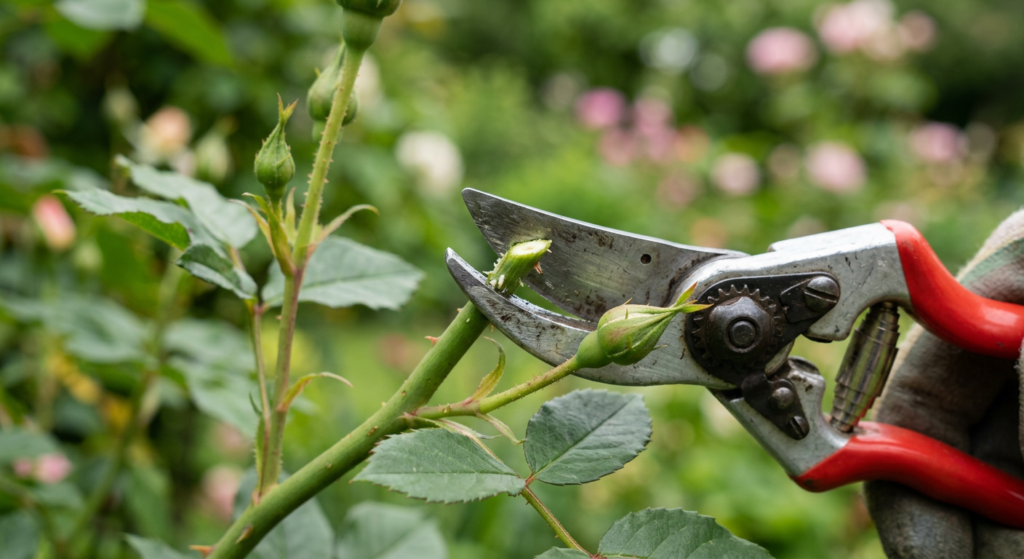
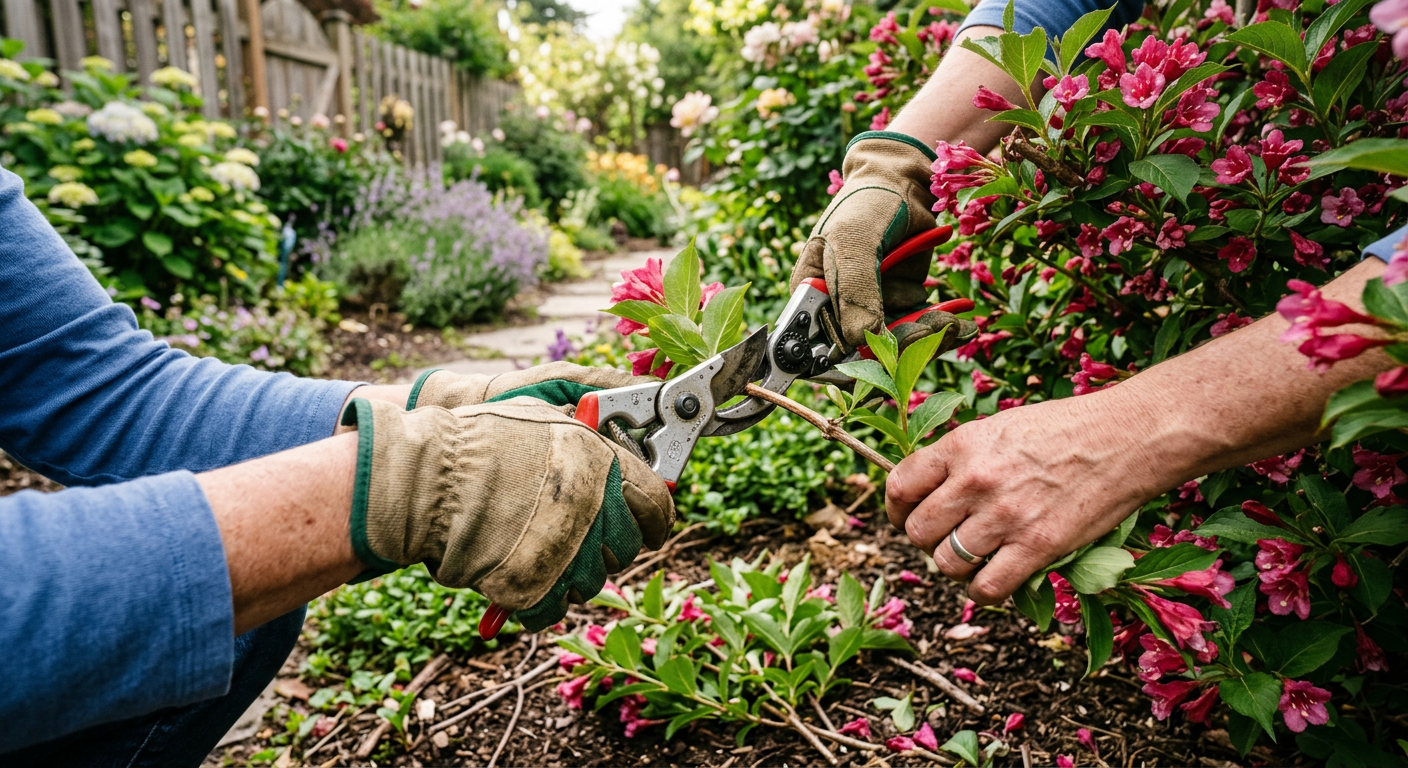
Bypass pruners (which cut like scissors, with two curved blades passing by each other) are the standard choice for most stems and small branches, giving a clean cut that heals well. Anvil pruners (a single blade closing onto a flat edge) tend to crush stems and are better reserved for cutting dead wood. Loppers offer more leverage for thicker branches up to about 2 inches, and a pruning saw is needed for anything larger. Keep your blades sharp and clean, dull or dirty tools crush stems rather than cutting cleanly, and can spread disease between plants.
How to Make a Proper Cut
For most stems, cut at a slight angle about a quarter inch above an outward-facing bud. Cutting too close to the bud can damage it, while leaving too much stub above it invites decay. Angling the cut helps water run off rather than pooling on the cut surface. For larger branches, use the “three-cut method”: an undercut a foot or so from the trunk to prevent tearing bark as the branch falls, a second cut further out to remove the bulk of the weight, and a final clean cut just outside the branch collar (the slightly raised area where the branch meets the trunk).
Common Pruning Mistakes to Avoid
Topping trees. Cutting a tree’s main branches back to stubs might seem like a quick way to control size, but it creates weak, poorly attached regrowth and long-term structural problems. Selective thinning is almost always the better approach.
Over-pruning at once. As a general guideline, avoid removing more than about a quarter to a third of a plant’s total growth in a single session. Removing too much at once stresses the plant and can trigger a flush of weak, overly vigorous regrowth.
Using dull or dirty tools. Beyond crushing stems, unclean tools can transfer disease between plants, especially when pruning anything showing signs of fungal or bacterial issues. A quick wipe with rubbing alcohol between plants is a simple habit worth building.
Pruning purely on a schedule rather than by need. Not every plant needs annual pruning. Many shrubs and trees do fine with only occasional shaping or the removal of dead wood every year or two; look at the plant’s actual growth and health rather than pruning just because it’s “that time of year.”
A Simple Starting Checklist
- Identify and remove anything dead, damaged, or diseased first.
- Check your timing against the plant’s bloom habit.
- Use clean, sharp, appropriately sized tools for the branch.
- Cut at a slight angle just above an outward-facing bud.
- Step back periodically to assess the overall shape, rather than making cut after cut without a plan.
- Stop once you’ve removed no more than about a third of the plant.
Final Thoughts
Pruning rewards a little bit of knowledge far more than it punishes an occasional mistake. Most plants are remarkably resilient, and a poorly timed or slightly imperfect cut is rarely fatal. Start with the three Ds, learn the basic bloom timing for your specific plants, and keep your tools sharp and clean. With a season or two of practice, pruning goes from intimidating to one of the most satisfying, and useful, jobs in the garden.
-
5 Signs Your Lawn Needs Overseeding (and How to Do It)
A thinning, patchy lawn isn’t a lost cause, overseeding is often all it takes to…
-
How Often Should You Really Water Your Lawn? A Season-by-Season Guide
The difference between a lush lawn and a stressed, patchy one often comes down to…
-
A Beginner’s Guide to Pruning: When and How to Cut Without Killing Your Plants
Pruning looks intimidating until you understand the basic rules, then it becomes one of the…

Leave a Reply