
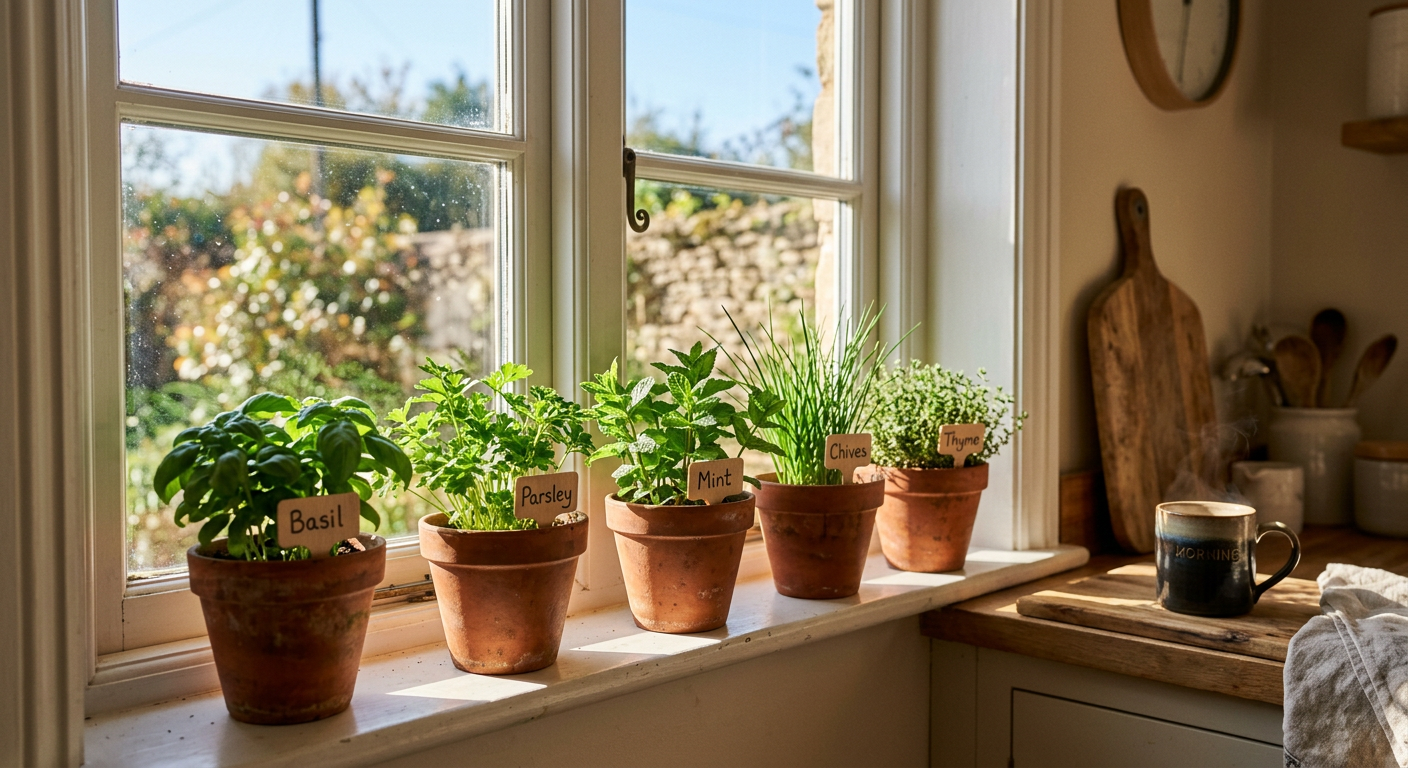
No yard, no problem: fresh basil, parsley, and mint are just a sunny window away.
There’s a real difference between dried herbs from a jar and a few fresh leaves snipped straight from a living plant. The good news is that you don’t need a garden, or even much space, to grow your own. A sunny windowsill, a handful of small pots, and a few basic habits are enough to keep your kitchen stocked with fresh herbs year-round.
Why Grow Herbs Indoors?
Herbs are some of the most forgiving plants for indoor growing. Many are naturally compact, tolerate the drier air of a home better than most vegetables, and reward even a small amount of care with a steady, cut-and-come-again harvest. Beyond convenience, homegrown herbs are noticeably more flavorful than store-bought ones, and growing your own means you’ll waste far less, no more half-used plastic clamshells wilting in the fridge drawer.
Choosing the Right Window
South-facing windows get the most consistent, direct light throughout the day and are ideal for sun-loving herbs like basil, rosemary, and thyme. East-facing windows offer gentler morning sun, which suits herbs like parsley, chives, and mint that appreciate a bit more shade. If your home doesn’t get much natural light, a simple grow light positioned a few inches above the plants can make up the difference; most kitchen herbs need at least 6 hours of light equivalent per day to grow well.
The Best Herbs for Beginners
Basil: Fast-growing and highly productive, but sensitive to cold drafts and overwatering. Pinch off the top leaves regularly to encourage bushier growth rather than a single tall stem.
Chives: Extremely low-maintenance and cold-tolerant. Snip from the outer edges with scissors, and they’ll keep regrowing from the center for months.
Mint: Grows almost too well; keep it in its own pot, since mint spreads aggressively and will crowd out other herbs if planted together.
Parsley: Slow to germinate from seed but very steady once established. Tolerates cooler, lower-light spots better than basil.
Thyme and Rosemary: Both prefer to dry out between waterings and do best in bright, sunny windows. These are more forgiving of neglect than daily-watering herbs like basil.
Starting From Seed vs. Buying Starts
Starting from seed is cheaper and lets you choose from a wider range of varieties, but it takes patience: most herbs take one to three weeks just to germinate. Buying small starter plants from a nursery or grocery store gives you a head start and near-instant usable leaves, which is often the better choice for beginners who want quick results, or for herbs like rosemary that are notoriously slow and tricky from seed.
Pots, Soil, and Drainage
Choose pots with drainage holes; this single detail prevents more indoor herb deaths than almost anything else. A 4- to 6-inch pot is plenty for most single herb plants. Use a well-draining potting mix rather than garden soil, which tends to compact in containers and hold too much water around the roots.
Watering Herbs Indoors
Overwatering is the most common mistake with windowsill herbs. As a general rule, check the top inch of soil before watering, if it’s still moist, wait another day or two. Herbs like basil and mint prefer consistently moist (but not soggy) soil, while thyme, rosemary, and sage prefer to dry out more fully between waterings. Always water at the base of the plant rather than overhead, which helps prevent fungal issues on the leaves.
Feeding Your Herbs
Indoor herbs in small pots use up nutrients in their soil faster than garden plants. A diluted, balanced liquid fertilizer every three to four weeks during the growing season keeps them productive. Avoid over-fertilizing basil in particular, since too much nitrogen can actually reduce the essential oils that give it flavor and aroma.
Harvesting for Continuous Growth
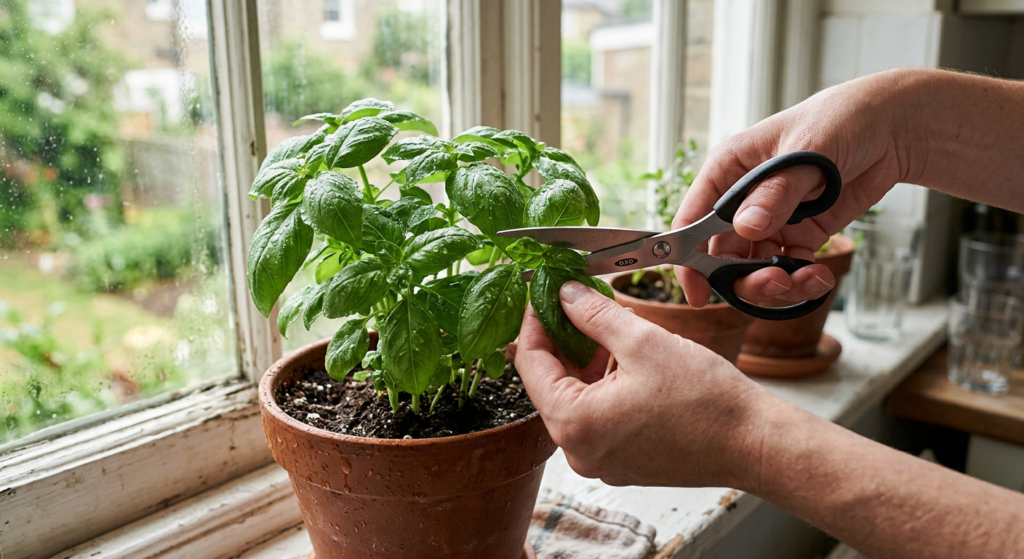
The secret to a productive windowsill herb garden is regular harvesting. Snipping leaves and stems, rather than letting plants grow untouched, actually encourages fuller, bushier regrowth. For most herbs, harvest from the outer, older growth first and leave the newer center growth to continue developing. Never take more than about a third of a plant at once, to give it enough leaf area to keep photosynthesizing and recover quickly.
Common Problems and Fixes
Leggy, stretched-out growth: Usually a sign of insufficient light. Move the pot closer to the window or add a grow light.
Yellowing lower leaves: Often overwatering. Let the soil dry out more between waterings and confirm the pot has drainage.
Small, tiny leaves and slow growth: Frequently a sign the plant needs more light or a light feeding of fertilizer.
Gnats hovering around the soil: Usually fungus gnats, drawn to consistently damp soil. Letting the top inch dry out fully between waterings typically resolves this within a couple of weeks.
Final Thoughts
A windowsill herb garden is one of the most rewarding small growing projects you can start, with a payoff that shows up in your cooking almost immediately. Pick two or three herbs you actually use often, give them the right light and a well-draining pot, and harvest regularly. Within a few weeks, you’ll have a steady supply of fresh herbs just an arm’s reach from the stove.
-
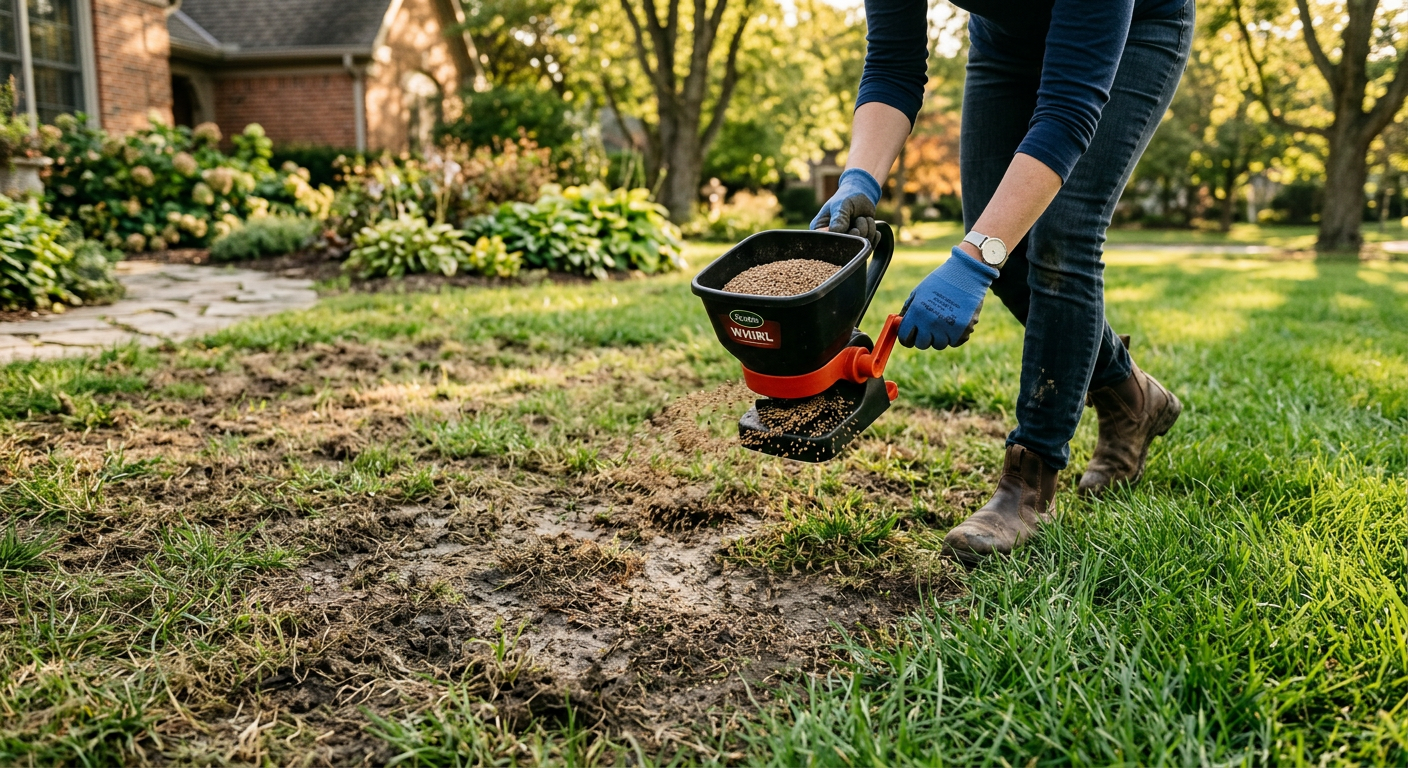
5 Signs Your Lawn Needs Overseeding (and How to Do It)
A thinning, patchy lawn isn’t a lost cause, overseeding is often all it takes to…
-
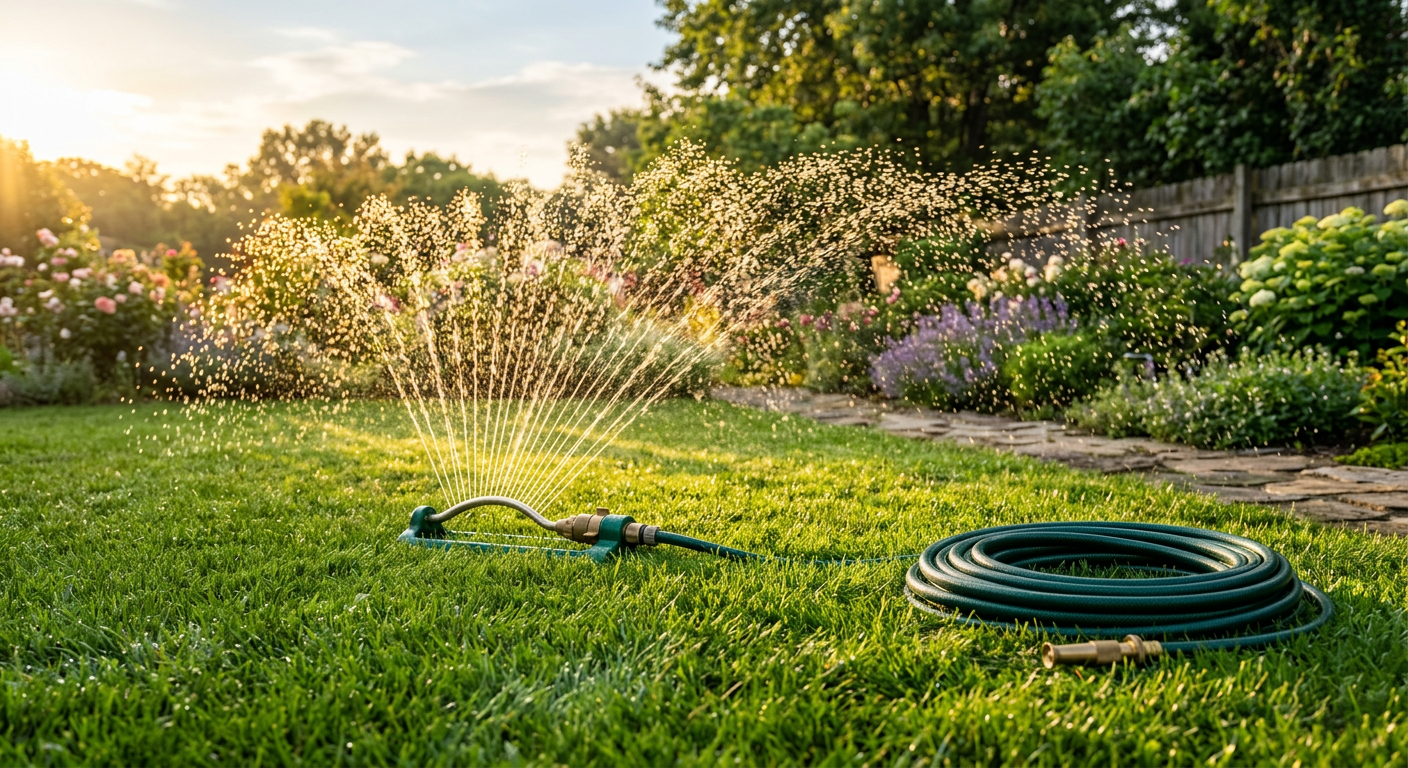
How Often Should You Really Water Your Lawn? A Season-by-Season Guide
The difference between a lush lawn and a stressed, patchy one often comes down to…
-
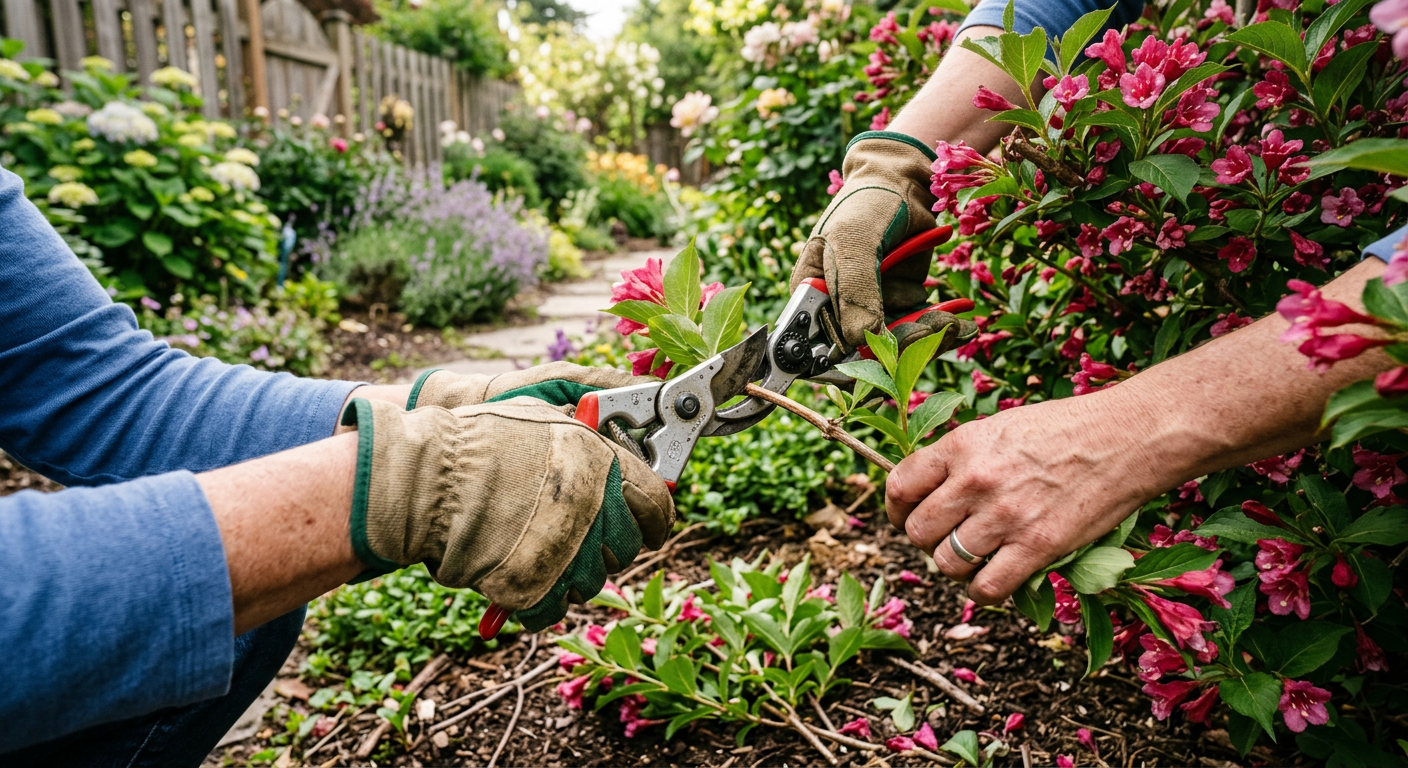
A Beginner’s Guide to Pruning: When and How to Cut Without Killing Your Plants
Pruning looks intimidating until you understand the basic rules, then it becomes one of the…

Leave a Reply