
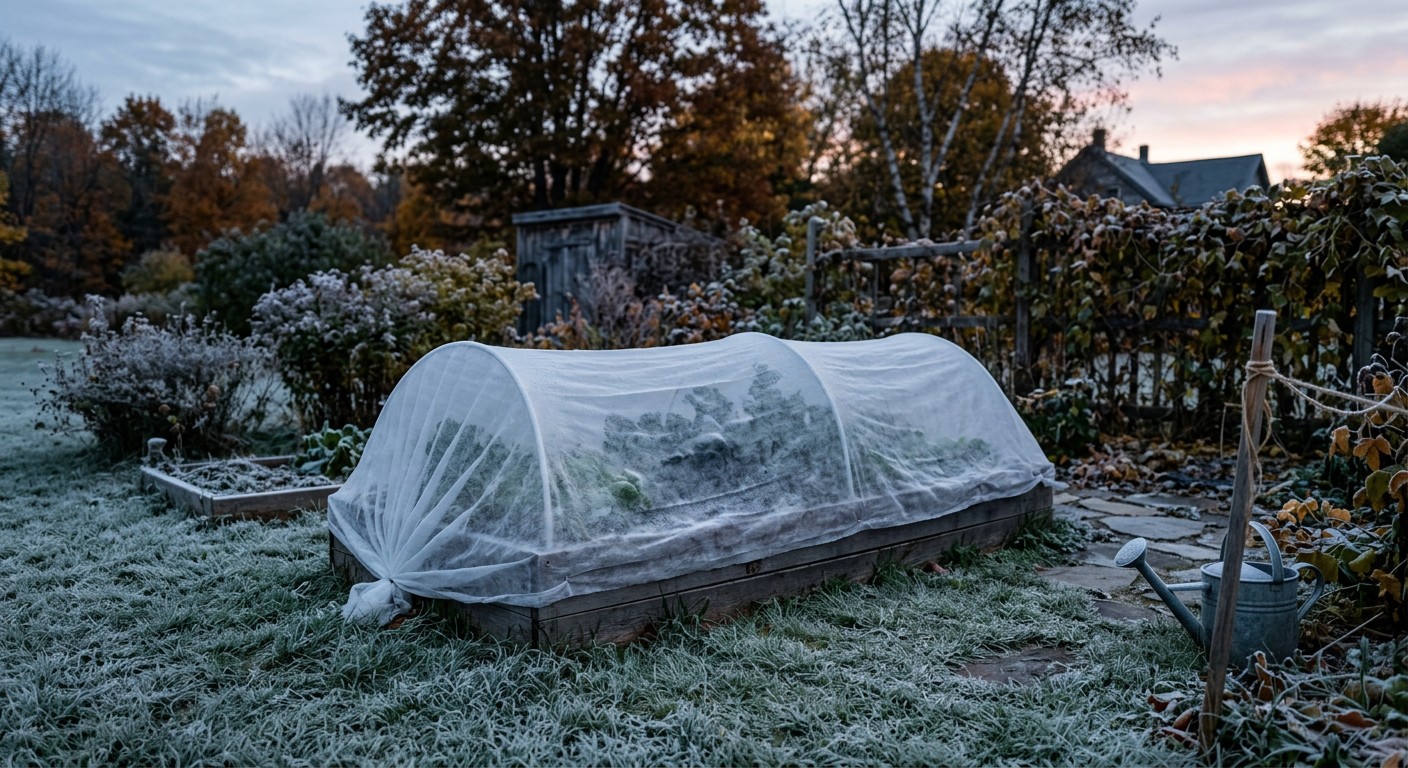
A surprise cold snap doesn’t have to end your growing season, here’s how to shield your plants and stretch the harvest a few more weeks.
An early frost can catch even experienced gardeners off guard, turning a thriving late-season garden into a sad collection of blackened leaves overnight. But frost damage isn’t always inevitable. With a bit of preparation and the right techniques, you can protect tender plants from an unexpected cold snap and often extend your harvest by several additional weeks.
Understanding Frost Risk
Frost forms when the air temperature near the ground drops to 32°F (0°C) or below, causing ice crystals to form on plant surfaces. A “light frost” (usually 29-32°F) damages tender plants but often spares hardier ones, while a “hard freeze” (below 25°F) can kill even cold-tolerant plants.
Frost risk is highest on clear, calm nights, since cloud cover and wind both help trap heat near the ground. If your local forecast predicts a clear, still night with temperatures approaching freezing, it’s time to take action, even if the daytime temperature felt perfectly mild.
Know Which Plants Are Most Vulnerable
Tender, warm-season plants are hit hardest by frost: tomatoes, peppers, cucumbers, squash, basil, and most annual flowers. Cold-hardy crops like kale, spinach, carrots, broccoli, and Brussels sprouts, on the other hand, actually tolerate light frost well, and some even taste sweeter afterward, as the plant converts starches to sugars in response to the cold. Knowing which of your plants fall into which category helps you prioritize your protection efforts where they matter most.
1. Cover Your Plants
The simplest and most effective frost protection is a physical barrier that traps ground heat around your plants overnight. Frost cloth (also called row cover) is purpose-built for this and allows some light and water through, meaning it can often stay on for a day or two if needed. In a pinch, old bedsheets, towels, or even cardboard boxes work for a single overnight freeze. Avoid plastic sheeting touching the leaves directly, since the cold plastic can conduct freezing temperatures right onto the plant; if using plastic, drape it over stakes or a frame so it doesn’t make contact.
Remove or vent covers the next morning once temperatures rise above freezing, since trapped heat and moisture can cause its own problems if left on too long during a sunny day.
2. Water the Soil Beforehand
Watering your garden thoroughly the day before an expected frost might sound counterintuitive, but moist soil holds heat better than dry soil and releases it slowly overnight, creating a slightly warmer microclimate around your plants’ roots.
3. Add Mulch for Insulation
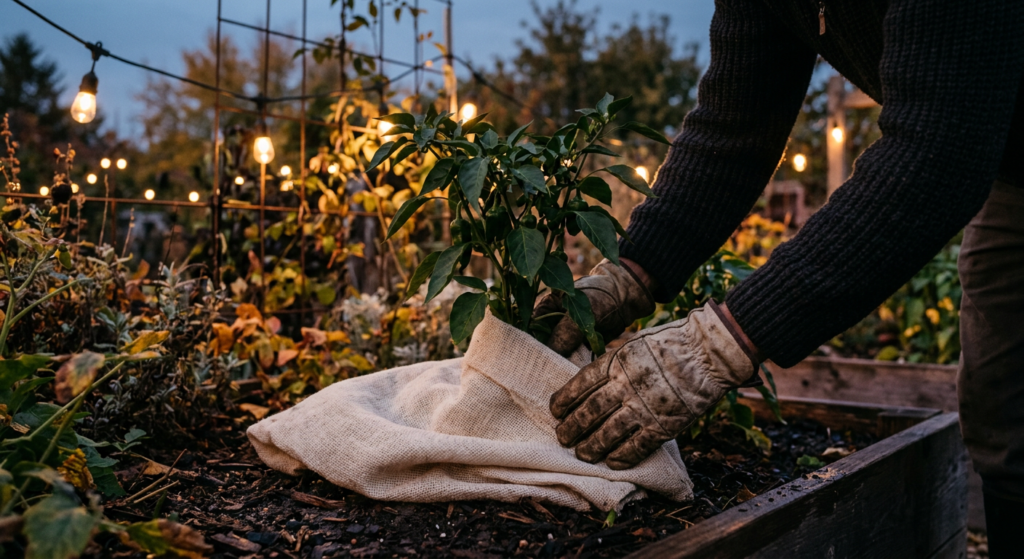
A thick layer of mulch, straw, shredded leaves, or wood chips, insulates the soil and root zone from sudden temperature swings. This is especially helpful for perennials and root vegetables like carrots and beets that you plan to leave in the ground.
4. Use Container Mobility to Your Advantage
If you’re growing tender plants in pots, the easiest frost protection is simply moving them indoors, into a garage, or under a covered porch for the night. Even a few degrees of extra shelter can be the difference between a saved plant and a lost one.
5. String Lights for Extra Warmth
Old-style incandescent string lights (not LEDs, which don’t generate meaningful heat) draped over covered plants can add just enough warmth to protect against a light frost. This trick is popular with gardeners protecting citrus trees and other frost-sensitive plants in borderline climates.
6. Harvest What You Can Beforehand
For plants too tender or too numerous to protect fully, harvesting ripe or nearly ripe produce before a hard freeze is often the most practical option. Green tomatoes, for example, can ripen indoors on a windowsill, and herbs can be cut and dried or frozen for later use.
After the Frost
If frost does damage some of your plants, resist the urge to prune away blackened leaves immediately. Wait until you’re confident the danger of further frost has passed, since the damaged growth can actually offer a small amount of insulation to the healthier parts of the plant beneath it in the meantime.
Final Thoughts
An early frost warning doesn’t have to mean the end of your growing season. With covers, mulch, smart watering, and a clear sense of which plants need the most protection, you can shield your garden through an unexpected cold snap and often keep harvesting for weeks longer than you’d expect.
-
5 Signs Your Lawn Needs Overseeding (and How to Do It)
A thinning, patchy lawn isn’t a lost cause, overseeding is often all it takes to…
-
How Often Should You Really Water Your Lawn? A Season-by-Season Guide
The difference between a lush lawn and a stressed, patchy one often comes down to…
-

A Beginner’s Guide to Pruning: When and How to Cut Without Killing Your Plants
Pruning looks intimidating until you understand the basic rules, then it becomes one of the…

Leave a Reply